
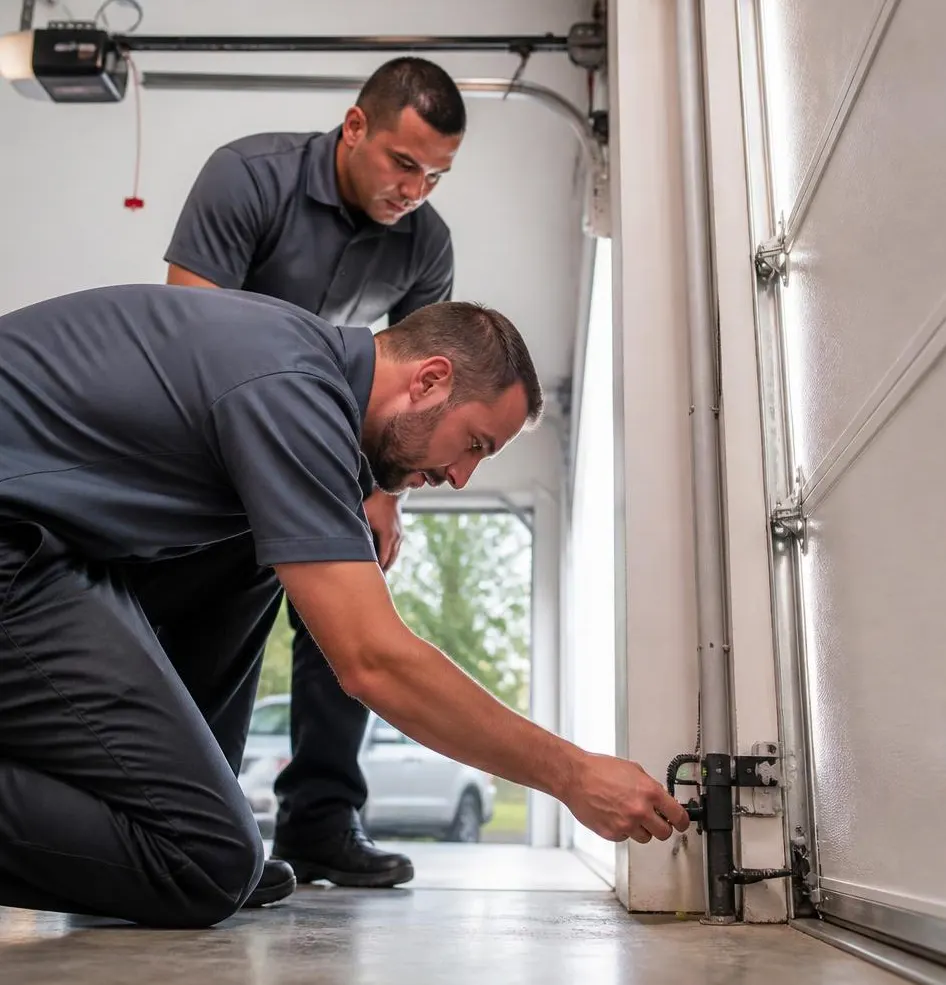
The short answer: use a silicone-based or white lithium grease lubricant on the hinges, roller stems, and springs twice a year, wipe the tracks clean instead of oiling them, and skip WD-40 as a lubricant altogether. Here's how to do it properly, and where to stop and call in a technician.
Why Lubrication Matters More Here
Garage doors on the Emerald Coast work against conditions most manufacturers didn't fully plan for. Salt air near the water speeds up corrosion on hinges and springs. Humidity swings cause condensation on metal parts overnight, which shows up as surface rust by morning. And after a summer of afternoon downpours and hurricane-season humidity, hardware that was fine in spring can be gritty, stiff, or squealing by fall. Late fall, once storm season winds down, is a good window to get ahead of it before winter dampness sets in.
Tools You'll Need
- Silicone-based garage door lubricant spray, or white lithium grease
- Clean microfiber rags or shop towels
- A soft-bristle brush or small vacuum attachment
- Work gloves and safety glasses
- A sturdy stepladder
Step-by-Step: How to Lubricate Your Garage Door
- Close the door and disconnect the opener. Pull the manual release so the door won't move unexpectedly while you're working near the springs and rollers.
- Wipe down the hardware first. Use a dry rag to remove dust, pollen, and salt film from the hinges, roller stems, and the torsion spring coils. Lubricant applied over grit just grinds it into the moving parts.
- Lubricate the hinges. Apply a light spray at each pivot point where the hinge bends. One or two seconds of spray per hinge is plenty; wipe away drips so it doesn't run down the door panel.
- Lubricate the roller stems, not the wheels. Spray the metal stem and bearing where it meets the track bracket. If your rollers are nylon, avoid soaking the wheel itself.
- Give the springs a light coat. A thin film of lubricant on the torsion spring coils helps prevent the rust that shortens spring life in salt-air conditions. Don't overdo it, excess lubricant just attracts dust.
- Lubricate the opener's drive mechanism. If you have a chain-drive opener, a light coat along the chain helps; belt-drive and screw-drive openers need only the screw rail lubricated per the manufacturer's manual.
- Leave the tracks dry. Wipe them clean with a rag, but don't spray lubricant inside the tracks. Rollers need to grip, not slide, and oil in the tracks attracts grime that causes binding.
- Run the door through a few full cycles. Reconnect the opener and operate the door several times, listening for squeaks or grinding that didn't go away. That's often a sign of a problem lubrication won't fix.
Products to Use vs. Products to Avoid
Use: silicone-based garage door lubricant spray (won't attract dust, holds up in humidity) or white lithium grease (good for metal-on-metal contact points like hinges and springs).
Avoid: WD-40 and similar penetrating oils. They're water displacers, not long-term lubricants, they evaporate quickly and leave surfaces dry again within days. Also avoid heavy grease or motor oil, which gums up with dust and salt residue faster than it protects anything.
What a Homeowner Can Do vs. What Needs a Technician
Cleaning and lubricating hinges, roller stems, locks, and opener chains is safe DIY territory. What's not: adjusting or replacing torsion springs, inspecting or tensioning lift cables, or diagnosing why a door is still noisy or sluggish after a proper lubrication job. Springs are under heavy tension, and frayed or rusted cables can snap without warning. If you spot either while you're working, stop and call it in.
When to Call Niceville Overhead Door Co
If lubrication doesn't quiet the noise, if you see rust pitting on the spring coils, or if the door feels heavier or slower to open than it used to, it's worth a professional look. Our Garage Door Maintenance & Tune-Up service covers a full hardware inspection along with the lubrication, and if we find a spring or cable that's corroded or wearing thin, our Garage Door Spring Repair and cable repair teams handle it safely on the spot.
Give Niceville Overhead Door Co a call to get your garage door tuned up before winter humidity sets in, we serve Niceville, FL and the surrounding Emerald Coast communities.